Lift certification is a documentation exercise as much as a technical one. Most delays we see are caused by missing records, not by faulty equipment. This guide explains what to gather and check before an inspection.
This article is general guidance. Regulatory requirements and inspection procedures are set by the relevant Lagos State and federal authorities, and they change. Confirm current requirements with the responsible authority or your consultant before acting.
Who is responsible
Responsibility usually sits with the building owner or the appointed facility manager, not the maintenance contractor. Your contractor supports the process with technical records and attendance, but the obligation to keep the lift safe and documented remains with the owner.
Documents to assemble first
- Original installation and commissioning records, including load test results
- Equipment details: manufacturer, model, capacity, speed, travel and number of stops
- The current maintenance contract and the last twelve months of service reports
- Records of any breakdown, entrapment or emergency callout, with the action taken
- Details of modernisation or component replacement, with dates
- Evidence that the maintaining engineers are qualified for the equipment
Technical checks before the inspector arrives
Safety systems
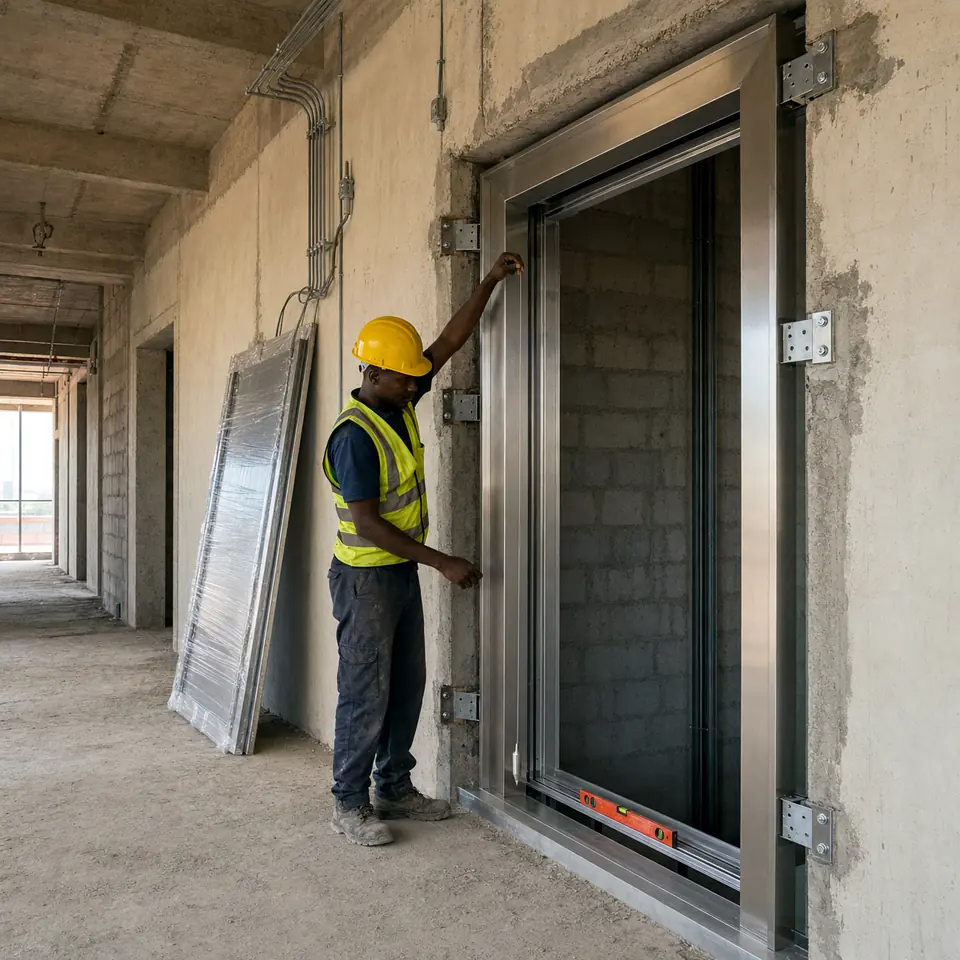
- Door interlocks engage on every landing and the car will not run with a door open
- Emergency alarm and two-way communication reach a location that is staffed
- Emergency lighting in the car works and holds charge
- Overspeed governor, safety gear and buffers are within their service dates
- Manual lowering procedure is documented and the tools are on site
Machine room and shaft
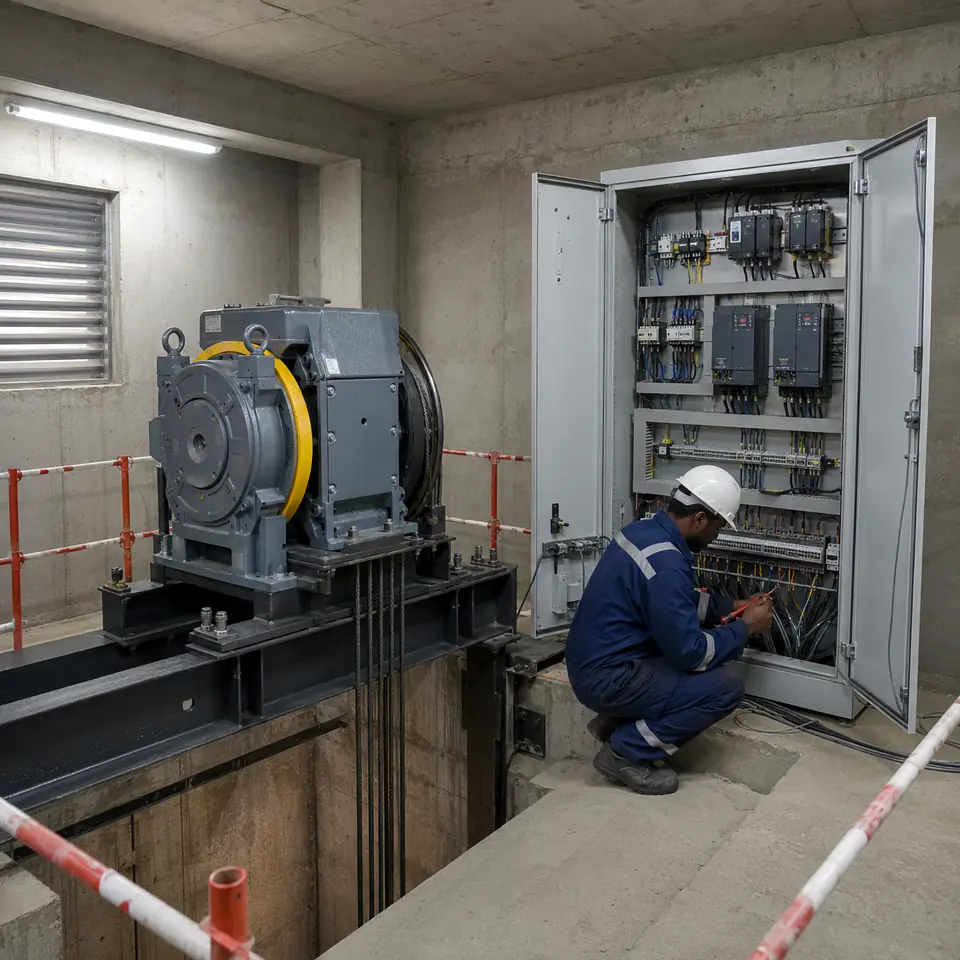
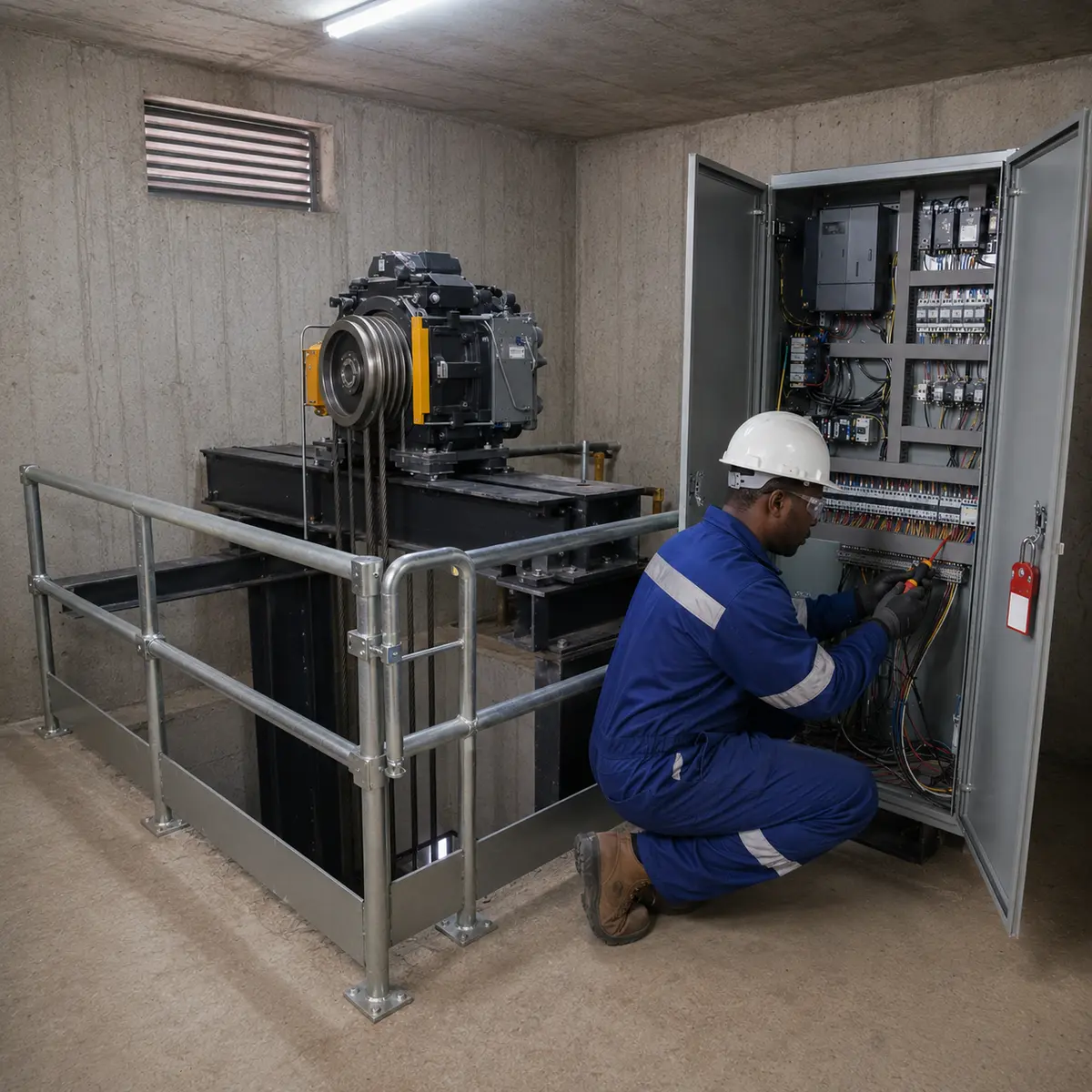
- Machine room is locked, ventilated, clean and used only for lift equipment
- Lighting, guarding and the main isolator are in working order
- Pit is dry and free of debris; the pit stop switch and ladder are present
- Rating plates, wiring diagrams and instructions are displayed and legible
Two weeks before inspection
- Ask your maintenance contractor for a pre-inspection visit and a written report
- Close out every open defect, or record a dated plan for those outstanding
- Print the maintenance log and file it with the installation records
- Confirm the emergency phone line is answered and tested
- Clear the machine room of stored items
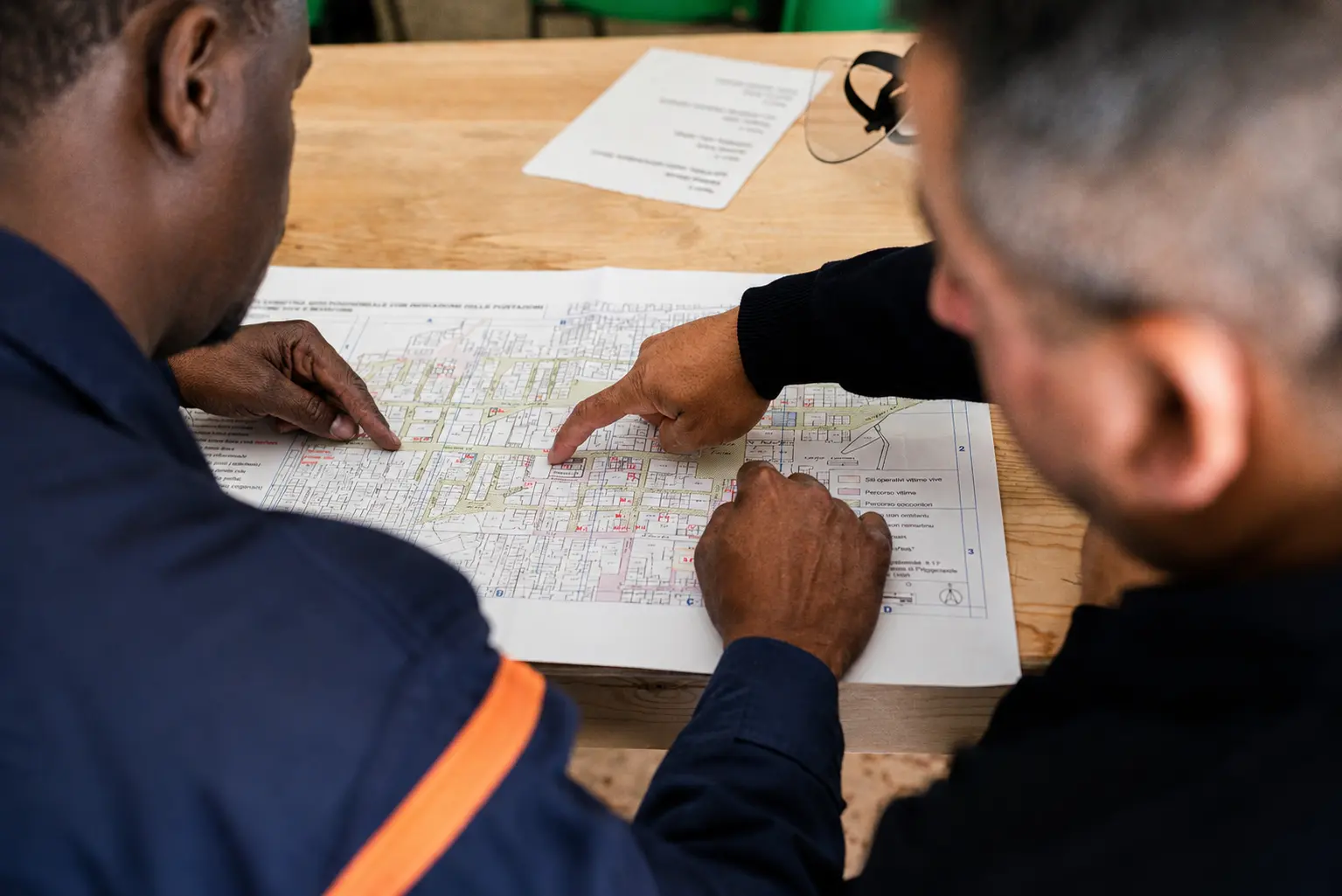
- Nominate one person to accompany the inspector and answer questions
Common reasons a lift fails a check
- No maintenance records, or records that do not match the equipment on site
- Emergency communication that rings out unanswered
- Machine room used for storage, or the door left unlocked
- Defects noted repeatedly in service reports with no corrective action
- Modifications made without documentation
Keep it simple after certification
Certification is easier the second time if the records stay current. Keep one file per lift, add every service report as it arrives, and review outstanding defects monthly with your contractor.