Maintenance contracts differ widely in what they actually cover. Two quotations can look similar in price and be very different in scope. Read the scope before you compare the figures.
Preventive visits
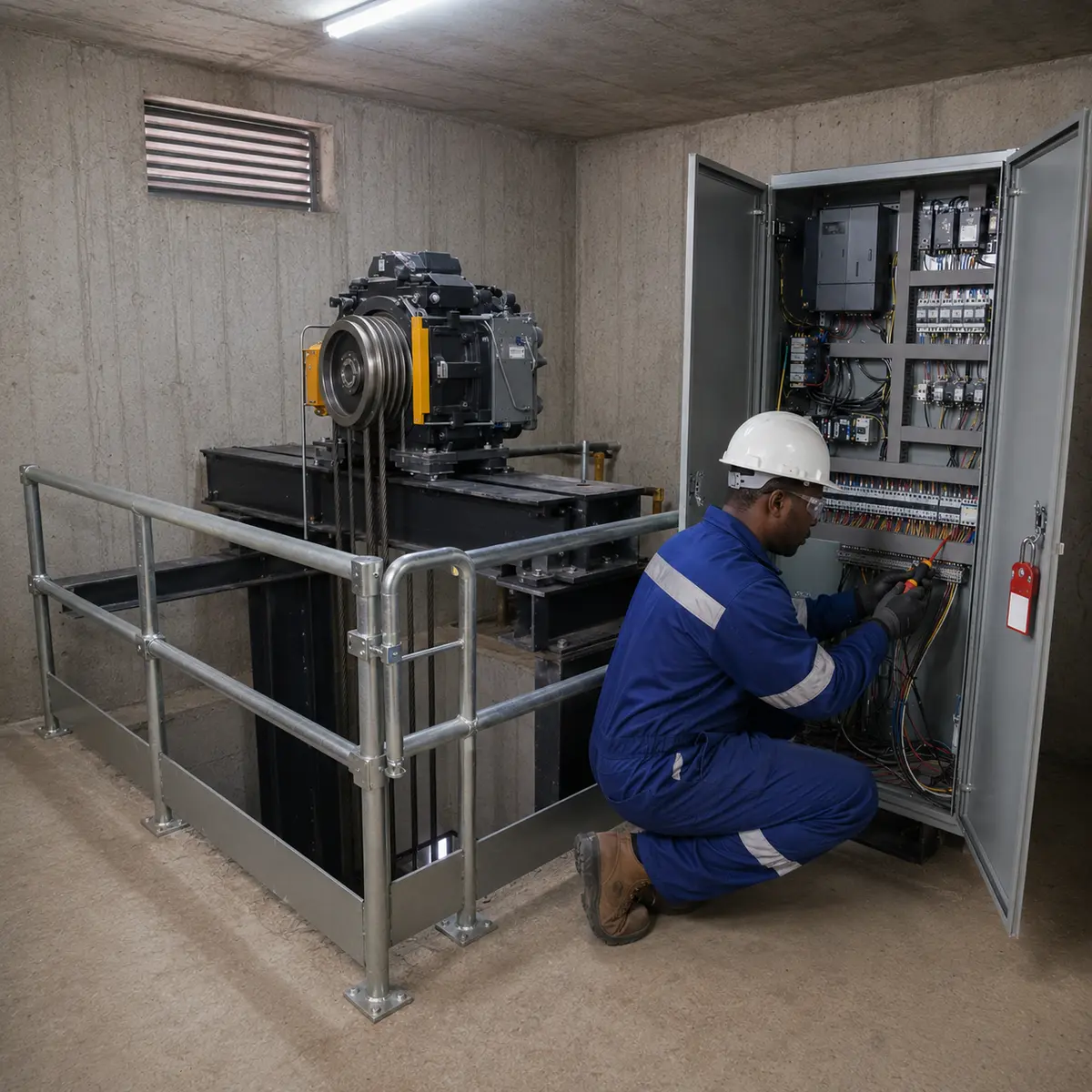
The contract should state how many visits you receive each year, what is done on each visit, and how long a visit takes. Monthly attendance is common for lifts in regular use. Ask for the task list, not just the frequency.
- Door operation, interlocks and levelling accuracy
- Ropes, sheaves, guide shoes and brake condition
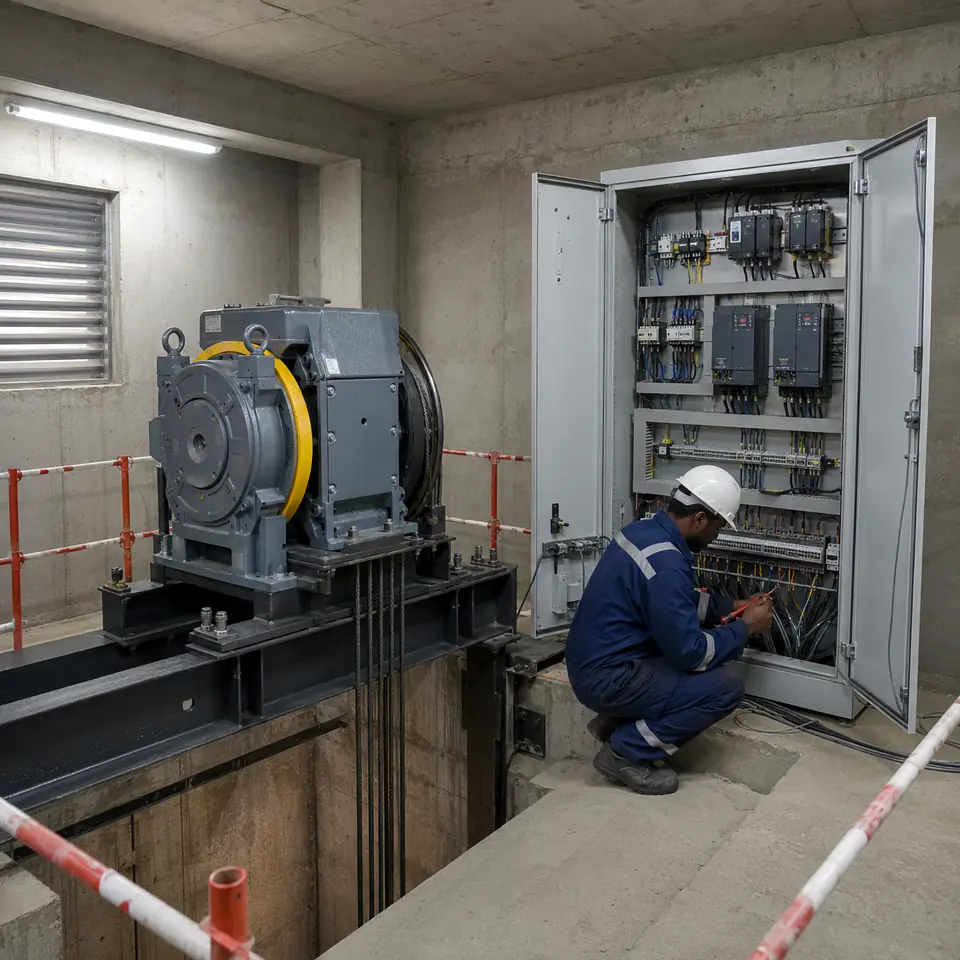
- Controller, drive and safety-circuit checks
- Lubrication, cleaning of the pit and machine room
- Test of the alarm, intercom and emergency lighting
Emergency response and entrapments
Ask for the response commitment in writing, separately for entrapments and for breakdowns. Confirm the hours of cover, who answers the line outside office hours, and whether the responding engineer is based near your building.
Reporting
- A written report after every visit, signed on site
- A defect register listing open items, severity and recommended action
- A monthly or quarterly summary for building management
- Photographic evidence for significant findings
Parts and exclusions
This is where contracts differ most. Establish whether parts are included, partly included with a value cap, or excluded entirely. Then establish availability: which components are held locally, and what the lead time is for items that must be imported.
Questions to ask before signing
- How many preventive visits per year, and what does each visit cover?
- What is the response commitment for an entrapment, and for a breakdown?
- Which parts are included, and which are chargeable?
- What are the typical lead times for controller boards, door operators and ropes?
- Who are the assigned engineers, and what training do they hold for this equipment?
- How are quotations for excluded work priced and approved?
- What are the notice periods and escalation route if performance falls short?
Judging value
Compare the cost per visit alongside the response commitment and parts position. A lower annual figure with no parts cover and slow response usually costs more once downtime and callout charges are counted.